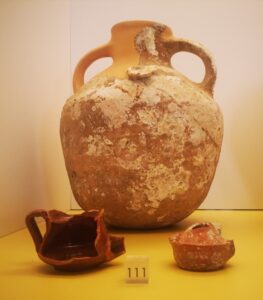
The numerous archaeological finds recovered from the waters off the coast of Caorle are indirect evidence of the lively commercial activity that once took place at the ancient Portus Reatinum during the Roman era: millstones, copper ingots, anchors, and a large number of amphorae. The amphora was, in fact, the quintessential transport container of antiquity, used to carry wine, oil, olives, and even more specialized products such as garum, the fish sauce considered a delicacy in Roman cuisine.
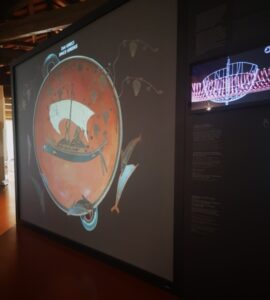
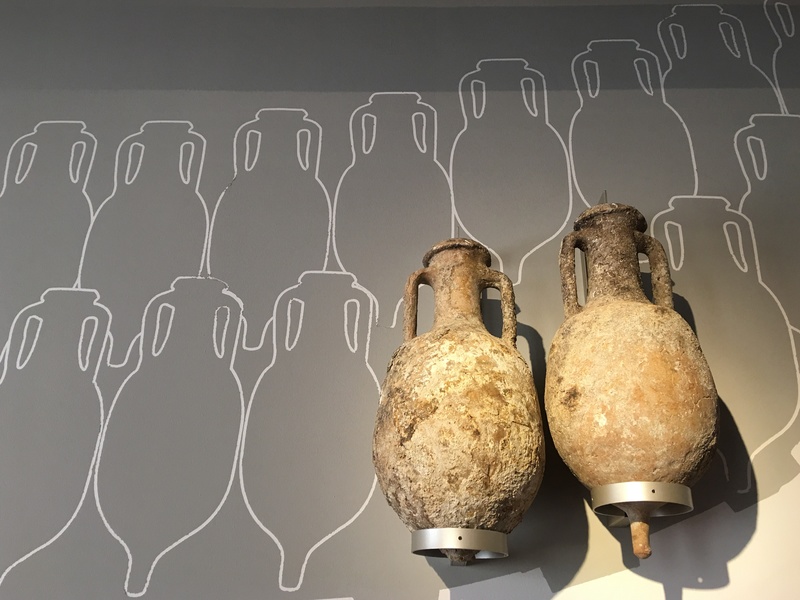
Amphorae are not only indicators of the scale and quality of ancient trade, but also accompany significant Roman-period discoveries—such as the wreck known as Caorle 1, which still lies a few miles offshore from the city. A video, filmed over the course of several archaeological survey campaigns on the wreck, gives viewers an almost tangible experience of the ship’s cargo, consisting of amphorae protruding from the seabed. Two of these amphorae are displayed beside the video, on the wall of the museum hall.