The area between the rivers Livenza and Tagliamento, which includes the Caorle district, was characterized in ancient times by a vast lagoon system. During the Roman period, the main center of this area became the colony of Iulia Concordia. The northern part of the territory was reclaimed and organized according to the principles of centuriation, while the southern area was marked by greater water instability.
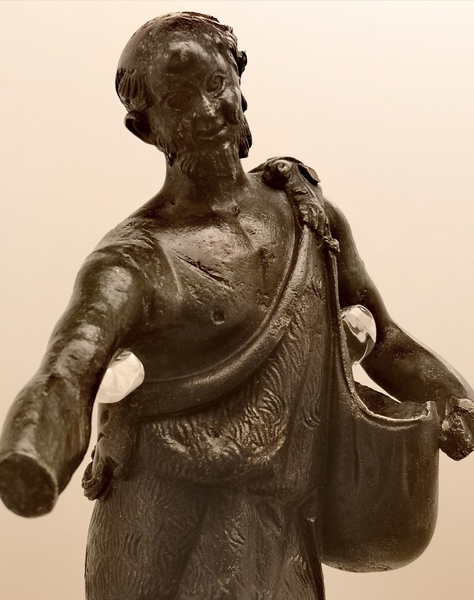
Along the coast, maritime villas were built, while the inland areas hosted numerous villae rusticae—productive rural estates that took advantage of the region’s natural resources. The discovery in 1981 of a small bronze statue of a Silenus led to excavation campaigns that revealed a villa rustica built in the 1st century CE on the left bank of a now-vanished branch of the modern Tagliamento River, in the locality of Lugugnana.
The statue of the Silenus, a mythical companion of Bacchus, together with a pruning hook and specific architectural features uncovered at the site, are all connected to the activities carried out there—namely, viticulture and wine production.